The True Cost of Living in The Villages, FL: A Complete Breakdown
Quick Snapshot: Monthly Cost of Living in The Villages
- Budget-conscious couple: Approximately $3,200-$4,000/month (paid-off home or mortgage under $1,000)
- Comfortable lifestyle: Approximately $4,500-$6,000/month (standard single-family home)
- Luxury lifestyle: Approximately $7,000-$10,000+/month (custom estate home, premium clubs, frequent dining)
- No state income tax — Social Security, pensions, and IRA withdrawals keep more of your money
- Biggest savings vs. Northeast: $1,000-$2,500/month less than comparable lifestyle in NY, NJ, or PA
One of the first questions I hear from buyers considering a move to The Villages is: "How much does it really cost to live here?" And it's a fair question. Between the different home types, the amenity fees, the insurance landscape, and Florida's unique tax structure, the answer isn't always straightforward.
I've been helping families, retirees, and international buyers navigate this community for over 20 years. In that time I've seen people stretch a modest retirement budget into a full, active lifestyle, and I've also seen luxury buyers get surprised by costs they did not anticipate. This guide covers every major expense category so you can plan with confidence.
Keep in mind that costs vary by village, home type, and personal spending habits. The numbers here are based on current market data and my own experience working with buyers across every price point. I have noted where estimates apply and where you should expect to do your own research.
1. Housing Costs
Housing is the biggest cost and the biggest variable. The Villages offers three main home types, and the price range across them is wide.
Patio villas are the most affordable entry point. These typically run $200,000 to $350,000 depending on location, age, and condition. They are generally two-bedroom, two-bathroom homes with a one-car garage and a compact yard. They are popular with singles and couples who want minimal maintenance. Many are located in older, established villages with mature landscaping and lower lot premiums.
Single-family homes make up the bulk of the market. Prices range from the $300,000s to $600,000s, with the median hovering around $390,000 as of mid-2026. These homes offer more square footage, two or three bedrooms, a two-car garage, and larger lots. You will find them in almost every village, from newer sections like Fenney and Dunedin to established areas like Glenview and Buffalo Ridge. What you get for $400,000 today is significantly more home than what the same budget would buy in most northeastern suburbs, a point I will come back to in section 10.
Custom estate homes sit at the top of the market. These are often on golf course lots, conservation lots, or in premium locations like the Village of Dunedin's estate sections. Prices start around $700,000 and can exceed $1.5 million. These homes feature custom architecture, pool and spa packages, outdoor kitchens, three-plus car garages, and finishes that rival any luxury community in Florida.
HOA and amenity fees deserve their own attention. Unlike a standard HOA, The Villages charges a combined amenity fee and CDD (Community Development District) assessment. The amenity portion typically runs $189 to $204 per month (as of 2025-2026) and covers access to all pools, fitness centers, recreation centers, and the 42 executive golf courses. The CDD bond assessment is a separate line item that funded the original infrastructure of your village and varies by village. In newer villages, the CDD assessment can add $50 to $150 per month. In older villages where the bonds are paid off, it may be zero. Combined, expect $100 to $300 per month depending on your village.
2. Property Taxes
Florida's no state income tax is a huge draw for retirees, and it is real. Your Social Security, pension distributions, and retirement account withdrawals all escape state income tax. The tradeoff is that Florida relies more heavily on property taxes to fund local services.
The Villages spans three counties, and the tax rate depends on which county your village falls in. Sumter County has the lowest millage rate of the three, approximately 12.28 mills as of 2025. Marion County and Lake County rates are slightly higher. The Sumter County rate breaks down to roughly 4.96 mills for county operations and 5.16 mills for schools, plus smaller district levies.
The homestead exemption is a critical benefit for Florida residents. If you make The Villages your primary residence, you can claim a $50,000 homestead exemption on your property's assessed value (up to $25,000 on the first $50,000 of value, plus an additional $25,000 on the next $75,000, excluding school taxes). For a home assessed at $350,000, this exemption can save you roughly $600 to $800 per year.
Here are typical annual property tax estimates based on current data:
- $250,000 home (patio villa) — approximately $2,800 per year ($233/month)
- $390,000 home (median single-family) — approximately $4,100-$4,600 per year ($340-$383/month)
- $600,000 home (premium single-family) — approximately $6,500-$7,200 per year ($540-$600/month)
- $1,000,000 home (custom estate) — approximately $11,500-$13,000 per year ($958-$1,083/month)
These are estimates and include the homestead exemption. Actual amounts depend on the exact assessed value, any caps from the Save Our Homes amendment (which limits annual assessment increases to 3% or CPI, whichever is lower), and your specific village's CDD property tax component.
3. Insurance
Homeowners insurance in Florida has gotten more expensive statewide, and that is the reality of living in a state exposed to hurricanes. That said, The Villages is in Central Florida, roughly 70 miles inland from either coast. This inland location means lower windstorm risk than coastal communities and lower premiums as a result.
For a $300,000 to $400,000 home in The Villages, annual homeowners insurance currently runs approximately $2,000 to $3,600 per year ($167 to $300 per month). The average among my clients is around $2,400 per year ($200/month). Homes built after 2002 benefit from updated building codes that improve wind resistance, so newer villages often have lower rates. Your individual premium depends on your home's age, construction type, roof condition, deductible, and coverage limits.
Flood insurance is a separate consideration. Most of The Villages is not in a high-risk flood zone, so flood insurance is not required for mortgage purposes unless you are in a designated flood hazard area. That said, some homeowners choose to carry it for peace of mind. A standard policy through the NFIP costs about $600 to $1,200 per year for moderate-risk areas.
Windstorm coverage is typically bundled into your homeowners policy in Florida rather than being a separate deductible as in some coastal states. Your policy will have a separate hurricane deductible, usually 2% to 5% of your home's insured value, which applies only to hurricane-related wind damage.
For context, homeowners switching from the Northeast or Midwest often see their premiums double or triple when moving to Florida. A $1,200 annual premium in Pennsylvania might become $2,800 in The Villages. However, you can offset this by shopping multiple insurers, bundling with auto, and maintaining a good claims history. Florida's insurance market has stabilized somewhat in 2025-2026 after several years of volatility, and rates are beginning to moderate.
4. Utilities
Utility costs in The Villages are generally reasonable, but Florida's summer heat means your air conditioning will run for eight months out of the year, and your electric bill will reflect that.
Electricity is provided by either Duke Energy or Sumter Electric Cooperative (SECO), depending on your village's location. The average monthly electric bill for a typical 1,500-to-2,000-square-foot home is approximately $120 to $200 per month. In winter months (November through February), bills can drop to $90-$120. In the peak summer months (July through September), expect $180 to $260 or more if you keep the thermostat at 72 degrees. The single largest factor in your electric bill is your thermostat setting, followed by home insulation quality.
Water, sewer, and trash are billed through the Villages Community Development Districts and typically run $60 to $130 per month combined depending on usage. The amenity fee of $189-$204 per month also appears on this combined bill, so do not be surprised when your first "utility" statement is $300 to $400.
Internet and cable vary by provider. Spectrum is the primary cable and internet provider in the area. Internet-only plans start around $50 to $80 per month. Cable TV packages range from $80 to $180 per month depending on channel packages. Many residents opt for streaming services instead, reducing their monthly TV bill to $40 to $70.
Total monthly utilities (electric, water, sewer, trash, internet): approximately $250 to $450, not including the amenity fee. Including the amenity fee, the combined monthly utility-related bill is typically $450 to $650.
5. Golf and Recreation
Golf is the centerpiece of recreation in The Villages, and one of the best values in the entire community. The 42 executive courses are free for residents. No tee time fee, no green fee, no monthly surcharge. Just show up with your resident ID and play. This alone can save an avid golfer $2,000 to $5,000 per year compared to public course play or a typical country club membership.
Championship courses require either an annual membership or a daily fee. Annual memberships range from $800 to $1,800 per year depending on the level of access and whether you want cart rental included. Daily greens fees run $30 to $60 per round with a cart.
Golf cart ownership is where many newcomers underestimate costs. A new gas or electric golf cart costs $6,000 to $12,000. Used carts in good condition run $3,000 to $8,000. Annual maintenance runs about $130 to $200 for a basic service (oil change, belt check, battery inspection). Electric carts require battery replacement every three to five years at a cost of $800 to $2,500. Gas carts need about $75 per year for tune-ups plus fuel. Many residents also buy golf cart insurance at $75 to $300 per year, and the required trail pass for golf course access is about $143 per year.
Club memberships and fitness are largely included in your amenity fee. The 30-plus swimming pools, 20-plus tennis courts, and all fitness centers are free with your resident ID. Some recreation centers offer premium fitness classes (yoga, Pilates, Zumba) for a small additional fee, typically $5 to $10 per class or $30 to $60 per month for unlimited classes.
6. Dining and Entertainment
One of the great joys of living in The Villages is how affordable the entertainment is. The three town squares host live music seven nights a week, free of charge. No cover, no minimum, no reservation needed. If your idea of a perfect evening is dancing to a Motown tribute band under the stars, your entertainment budget can be close to zero.
Dining costs vary considerably by venue. A casual lunch at a town square restaurant runs about $12 to $18 per person. Dinner at a mid-range restaurant like R.J. Gator's or Lighthouse Point is $25 to $45 per person including a drink. A special occasion dinner at Bella Vita Italian Steakhouse or a similar upscale spot runs $50 to $80 per person. Most couples I work with budget $300 to $600 per month for dining out, which covers a few dinners and several lunches each week.
Hobby and club costs are minimal. The 3,500-plus resident-run clubs are free or charge nominal dues to cover materials. Woodworking club fees might run $25 to $50 per year. A photography club might charge $30 per year. Wine tasting groups often share the cost of bottles. The Sharon L. Morse Performing Arts Center tickets range from $25 to $75 per show, and the Roxy Theatre shows first-run movies for around $10 per ticket.
7. Healthcare
Healthcare costs depend entirely on your insurance coverage, medical needs, and whether you are on Medicare. The Villages is served by UF Health Spanish Plaines Hospital (a 307-bed acute-care facility on El Camino Real), plus outpatient centers from Cleveland Clinic and AdventHealth in the surrounding area.
For Medicare beneficiaries, Medicare Part B premiums are the same as anywhere in the country ($174.70 per month for most beneficiaries in 2026, though this adjusts annually). Medicare Supplement (Medigap) plans cost roughly $100 to $300 per month depending on the plan tier and your age when you enroll. Medicare Part D prescription drug plans average $30 to $80 per month. Many residents choose Medicare Advantage plans, which bundle Part A, Part B, and Part D into a single plan with lower monthly premiums (often $0 to $50 per month) but narrower provider networks.
Out-of-pocket costs include copays for primary care visits ($15 to $30), specialist visits ($30 to $50), and prescription copays. Dental, vision, and hearing aids are not covered by Original Medicare. Many residents budget $100 to $300 per month for healthcare costs beyond their insurance premiums, which covers routine visits, prescriptions, and dental care.
One advantage of The Villages is the concentration of healthcare providers. With a large Medicare-age population, the area has more primary care doctors, specialists, and walk-in clinics per capita than most communities of this size. Wait times for appointments are generally shorter than in major metropolitan areas.
8. Transportation
Transportation costs in The Villages are lower than in most communities because so many daily trips are done by golf cart. Many residents fill up their car's gas tank once every two to three weeks.
Car insurance in Florida is higher than the national average. Expect to pay $1,200 to $2,200 per year for full coverage on one vehicle, depending on your driving record, age, and coverage limits. Florida is a no-fault insurance state, which adds to the premium. Bundling with homeowners insurance can save 10% to 20%.
Gas costs are modest for the reasons mentioned above. If you drive a standard sedan for occasional grocery runs, medical appointments, and weekend trips, budget $60 to $120 per month. Residents who frequently drive to Orlando (45 minutes), Ocala (30 minutes), or Tampa (90 minutes) will spend more.
Air travel is convenient. Orlando International Airport (MCO) is about 75 minutes from The Villages, Orlando Sanford International Airport (SFB) is about 60 minutes, and Ocala International Airport (OCF) is about 25 minutes for private and charter flights. Frequent flyers should factor in parking or shuttle costs, typically $10 to $20 per day at MCO or $50 to $100 round trip for a shuttle service.
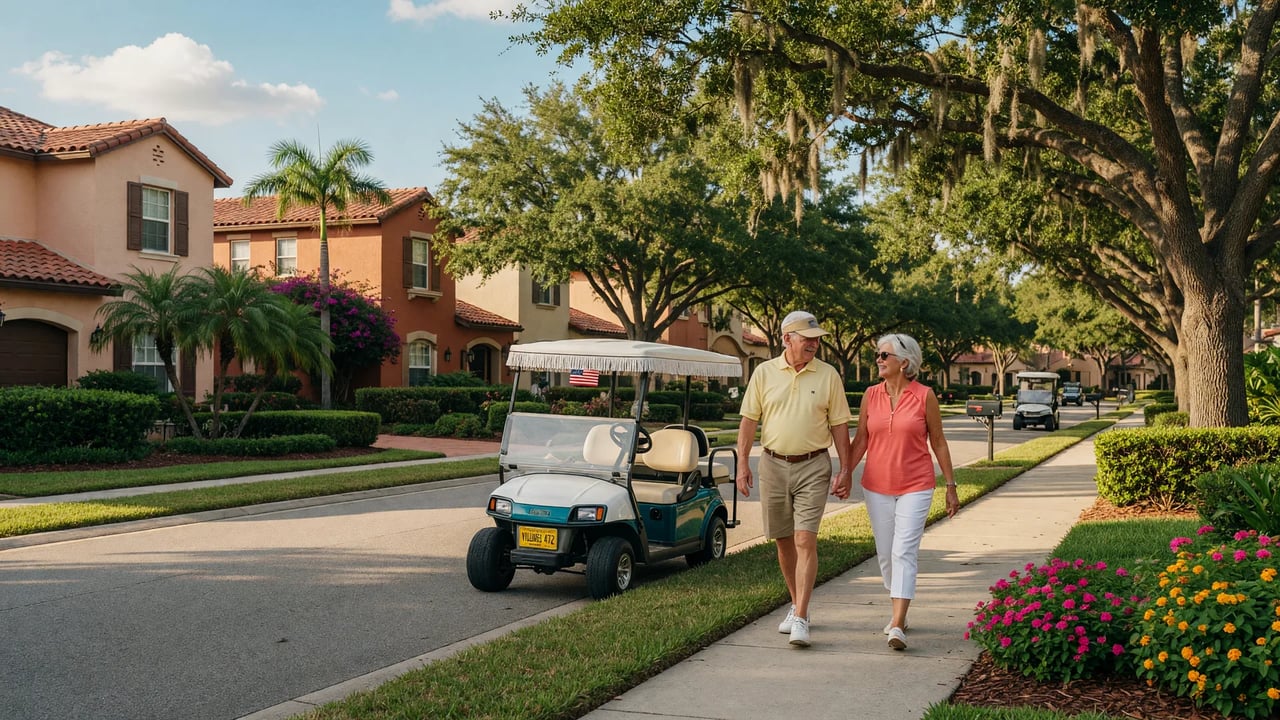
The biggest transportation savings in The Villages comes from the 100-plus miles of golf cart paths. A golf cart can take you to most shopping centers, all three town squares, medical offices within the community, and recreation centers. If you budgeted $400 per month for car expenses in your previous home, expect that to drop to $150 to $250 per month here.
9. Groceries and Daily Living
Grocery costs in The Villages run slightly above the national average. The grocery cost index for The Villages is about 102.4, meaning groceries are roughly 2% to 3% more expensive than the U.S. average. For a couple, a typical monthly grocery budget is $400 to $600, depending on how much you cook at home versus dine out.
Publix is the dominant grocery chain, with multiple locations throughout the community. It is known for good service and quality but prices are higher than Walmart. Walmart Supercenter in Lady Lake and Publix in Lake Sumter Landing are the two busiest grocery locations. Many residents split their shopping between the two, using Publix for fresh produce and meat and Walmart for pantry staples and household goods. Aldi also has a location in nearby Lady Lake for budget-conscious shoppers.
Pharmacy costs are standard. Publix, CVS, and Walgreens all have locations throughout The Villages. Prescription prices vary by insurance plan and whether you use mail-order pharmacies. GoodRx and other discount cards are widely used by residents to reduce costs on medications not fully covered by insurance.
Other daily living expenses like household supplies, toiletries, and personal care items typically run $100 to $200 per month for a couple.
10. Comparison to Other States
This is the section that gets the most attention from out-of-state buyers. I have helped people move to The Villages from all over the country, and the cost savings are real and substantial. Here is a side-by-side monthly comparison for a couple living comfortably in a paid-off $390,000 home:
Expense | The Villages, FL | New York (suburbs) | New Jersey | Pennsylvania | Ohio |
|---|---|---|---|---|---|
Property tax | $360 | $650 | $700 | $350 | $300 |
State income tax | $0 | $650 | $500 | $310 | $280 |
Homeowners insurance | $200 | $100 | $90 | $80 | $75 |
Utilities + amenity fee | $550 | $400 | $420 | $380 | $360 |
Dining & entertainment | $400 | $600 | $550 | $450 | $400 |
Groceries | $500 | $550 | $550 | $480 | $450 |
Transportation | $200 | $450 | $400 | $350 | $350 |
Healthcare (premiums) | $350 | $350 | $350 | $350 | $350 |
Estimated monthly total | $2,560 | $3,750 | $3,560 | $2,750 | $2,565 |
Note: This comparison assumes a paid-off $390,000 home and does not include mortgage payments, golf cart costs, or discretionary spending such as travel. State income tax estimates assume a combined retirement income of $60,000 per year (Social Security plus pension). Your actual savings will vary based on your income sources, home value, and spending habits.
The big picture: moving from the New York suburbs to The Villages saves a typical couple $1,000 to $1,500 per month or more, primarily from eliminating state income tax and reducing transportation and dining costs. The savings from New Jersey are similar. From Pennsylvania and Ohio, the savings are smaller but still meaningful, particularly in the winter heating and clothing categories that are not reflected in this table. And remember — the price of a comparable home in The Villages is often $100,000 to $300,000 less than the same house in New York, New Jersey, or Connecticut.
11. Hidden Costs to Watch For
Every community has costs that new residents do not think about until the bill arrives. Here are the most common ones I hear about from my buyers after they settle in.
Lawn care is not included in your amenity fee. If you buy a single-family home with a yard, you will either maintain it yourself or hire a service. Lawn care runs $100 to $200 per month for mowing, edging, and trimming. If you want fertilization and weed control, add $30 to $60 per treatment. Patio villa and courtyard home owners have smaller yards, so their costs are lower.
Pool maintenance is a significant cost if your home has a private pool. Weekly service runs $80 to $150 per month. If you do it yourself, chemicals and electricity for the pump add about $40 to $80 per month. Pool heaters (common in The Villages for year-round use) add substantially to your electric or gas bill during winter months.
Hurricane preparation is not a monthly cost but a seasonal one. If you choose to install storm shutters or buy hurricane panels, expect a one-time cost of $2,000 to $6,000. Impact windows are a larger investment at $15,000 to $30,000 for a typical home. Each hurricane season you will want to stock supplies (water, batteries, non-perishable food), which runs about $100 to $300 per year.
A/C servicing is a non-negotiable cost in Florida. Your HVAC system runs almost year-round, and annual maintenance (filter changes, coil cleaning, refrigerant check) costs about $150 to $300 per year. The average lifespan of a central AC unit in Florida is 10 to 15 years. Replacement costs $5,000 to $12,000 depending on the system size and efficiency rating. Budgeting $50 to $100 per month for an eventual replacement fund is wise.
Golf cart maintenance is an ongoing cost that many new residents underestimate. As noted in section 5, annual service runs about $130 to $200, and batteries need replacing every three to five years. The hidden cost is the inevitable upgrade cycle. Many residents find themselves wanting a street-legal cart with better lights, a sound system, or a lifted suspension within a few years. That upgrade runs $2,000 to $6,000.
Pest control is a Florida necessity. Monthly or quarterly service runs $40 to $80 per month. The subtropical climate means ants, roaches, and palmetto bugs are a fact of life. Most residents use a pest control service, and most are glad they do.
12. The Bottom Line: What You Will Actually Spend
Let me pull everything together into three realistic monthly budgets. These estimates assume a paid-off home (no mortgage) and are for a couple with typical spending habits. If you still have a mortgage, add that payment to the totals.
Budget-Conscious Lifestyle: $3,200 to $4,000 per month
This assumes a paid-off patio villa or courtyard home valued at $250,000 to $300,000, a used golf cart, moderate utility usage, cooking at home most nights, and occasional dining at the town squares. This couple plays executive golf several times a week, uses the free pools and fitness centers, attends free live music, and belongs to a few resident-run clubs. It is a perfectly full and active lifestyle.
Comfortable Lifestyle: $4,500 to $6,000 per month
This assumes a paid-off single-family home valued at $350,000 to $500,000, a new or nearly new golf cart, lawn care service, a reasonable A/C replacement fund contribution, weekly dining out including dinner at the squares, a championship golf membership or daily fee play, and a couple of entertainment outings per month. Most of the buyers I work with fall into this category, and they tell me they live very comfortably with room left over for travel and hobbies.
Luxury Lifestyle: $7,000 to $10,000+ per month
This assumes a paid-off custom estate home valued at $700,000 to $1.5 million on a golf course lot, with a private pool, upgraded golf cart, full championship golf membership, frequent dining at upscale restaurants, premium healthcare plans, travel, and social activities. At this level, you are not worrying about any of the individual line items; the question is more about customizing your experience exactly the way you want it.
The most important thing I can tell you after 20 years in this market: most people who move to The Villages find that their overall cost of living is lower than where they came from, while their quality of life is significantly higher. The combination of no state income tax, free executive golf, affordable entertainment, and lower transportation costs adds up to a powerful financial advantage. And because the community is designed for an active lifestyle, you may find yourself spending less on healthcare, entertainment, and daily stress than you did in your previous life.
Of course, your individual situation is unique. The best way to get an accurate picture is to visit, explore different villages, talk to current residents, and work with someone who knows the market inside and out. I have been doing this for two decades, and I would be honored to help you find your place here.
Related Posts
Living in The Villages, FL: Everything You Need to Know
Your complete guide to golf, town squares, dining, and the active lifestyle.
Getting StartedYour First Week in The Villages
A day-by-day guide to settling into your new home.
GolfThe Complete Beginner's Guide to Executive Golf
Everything about the 42 free executive courses.
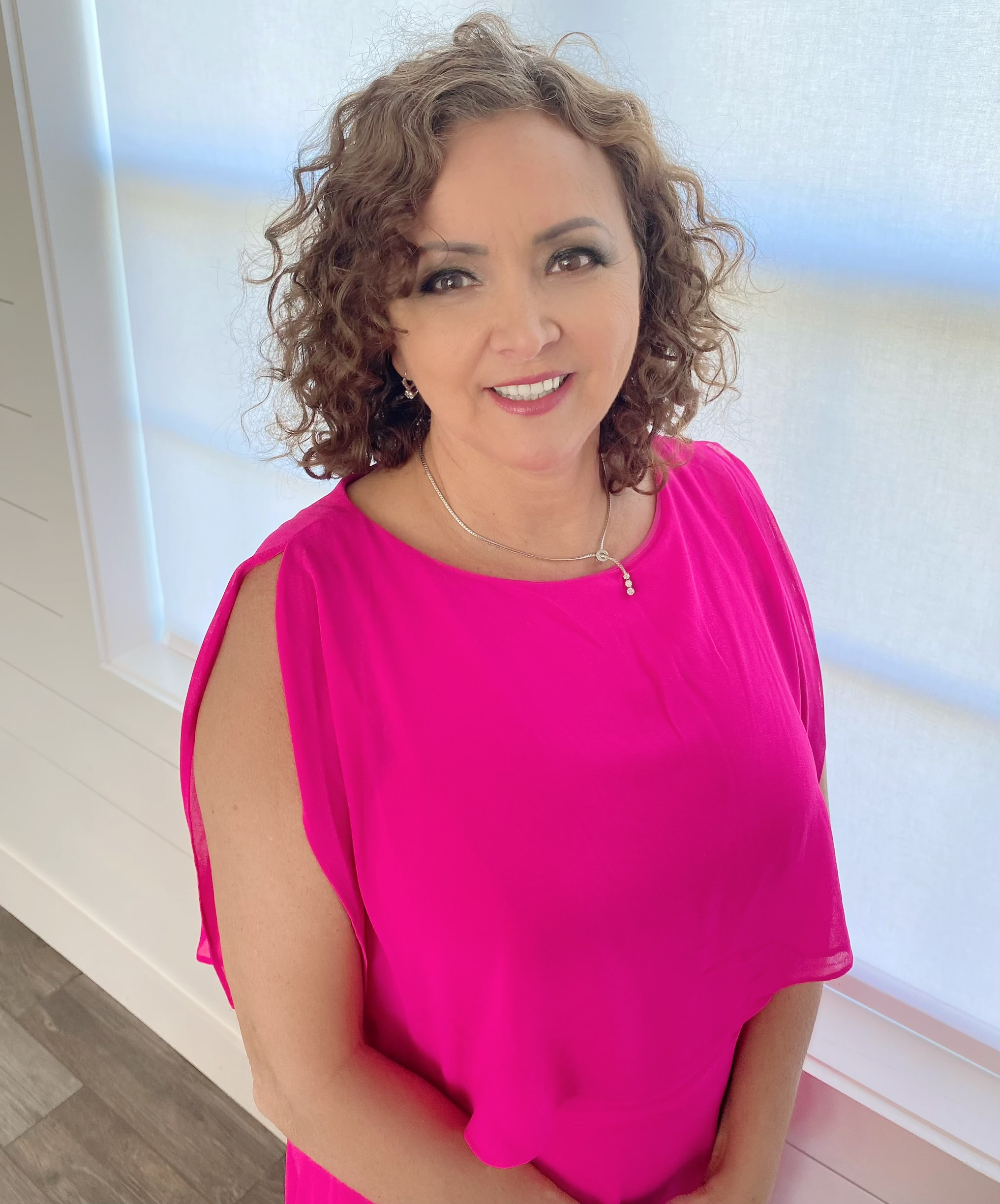
About the Author
Lili Whittington, MBA is a Broker Associate with Soundings LLC in The Villages, FL. With over 20 years of experience and 450+ homes sold, she specializes in luxury homes, retirement relocation, and senior living throughout Marion, Sumter, and Lake counties. She holds designations including CLHMS, SRES, MRP, ABR, SFR, and CIPS, and is bilingual in English and Spanish.
Ready to make The Villages your home?
Lili Whittington, MBA · Broker Associate · Soundings LLC
Licensed in Florida · BK3090328
Call or text: 954-235-4766
Email: [email protected]